1. Layers of reference
<Cognitive Axioms 04_2> said real cognitive computation has no transformation, only reference. But reference isn't one thing. Depending on how strong the similarity is, it splits into layers, from loose reference all the way up to reference that is nearly transformation. Most of what looks like transformation is reference sitting at the very top of those layers.
2. Mercury's orbit
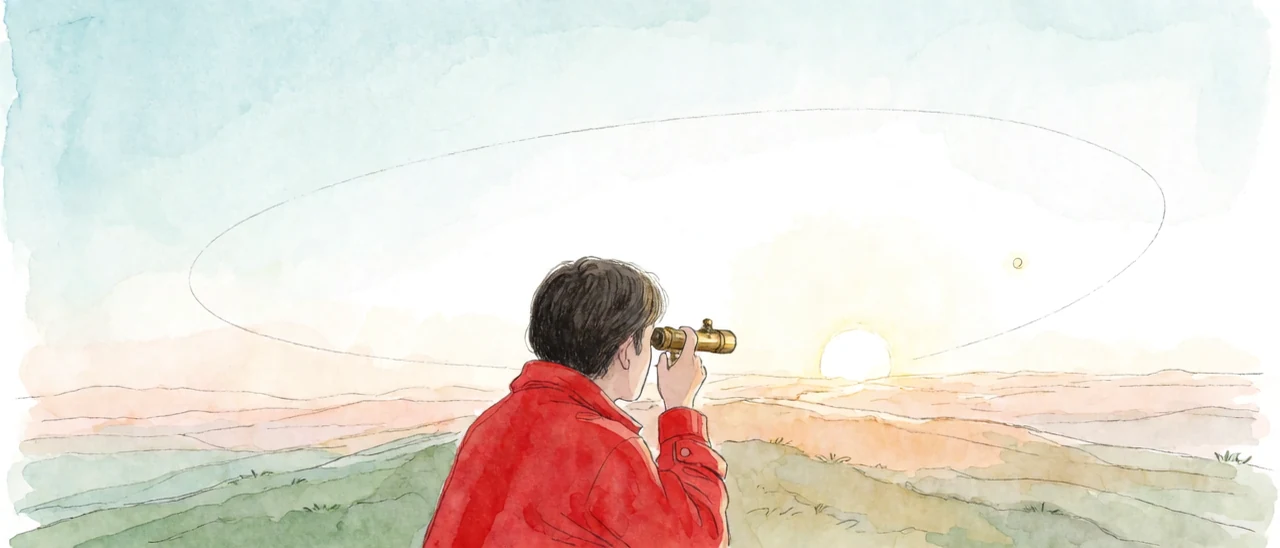
From the standpoint of modern physics, many formulas of classical mechanics can't avoid small errors. The standard example is the precession of Mercury's elliptical orbit. The precession angle calculated with Newtonian mechanics didn't match observation, and only with Einstein's relativistic correction could it be calculated exactly.
Yet most orbital calculations today still use the approximations classical mechanics gives. At the scale the purpose requires, the error doesn't show. Mercury's precession became a problem only after the scale of observation got finer than the error.
3. Manufactured goods and tolerance
The same goes for architecture, civil engineering, and manufacturing. Mass production is an approach built on making standardized, identical products — yet strictly speaking, identical products can't exist. Two screws off the same line differ at the atomic level.
Still, the two are sold as the same screw and fit the same hole. That's because an unspoken agreement is at work, one that treats similarity above a certain level as identity. The line for that agreement is the tolerance, and the tolerance is set by the job the part has to do. That's why a watch part and a bridge bolt have different tolerances.

4. Yesterday's self
Personal identity isn't much different. Nearly every day, sleep halts and resets a person's waking cognitive computation. Strictly speaking, yesterday's A is not the same person as today's A — physically or mentally.
Anyone feels the distance between A at seven and A at sixty. Between yesterday and today, that distance gets ignored, and the ignored gap is perceived as sameness. That ignoring is the core of what we call personal identity.
No unchanging substance is needed to connect yesterday's self with today's. Identity is what you get when near-transformation references are chained day after day. The substance removed in <Cognitive Axioms 04_1> plays no part in judging identity either.

5. A definition of identity
The three cases share one structure. Differences smaller than the scale the purpose requires are read as zero, and a difference read as zero is treated as identity. Identity is not a property sitting inside the object; it's a judgment made by the scale of a coordinate system. Make the scale finer and what was the same becomes different. Make it coarser and what was different becomes the same.
Being the same means the difference falls below the scale.