The spiritual traditions in <Cognitive Axioms 05_3> parted ways over the narrative of arrival. The theories in this piece stand on the opposite side. They set up neither substance nor arrival and describe only observable functions. They are the closest to the governor concept, which is exactly why the points where they part need to be pinned down more precisely. The criterion is the second one: are space-time coordinates and the boundary between self and other presupposed as facts of the world, or seen as settings for survival?
1. Antonio Damasio: the three-layer self
Damasio distinguishes the proto-self, the core self and the autobiographical self. The layered structure maps anatomically onto avatar, handler and governor. Each layer is established through observable results, cases of neurological damage, so it passes Peirce's maxim. What passes extends to the core self and the autobiographical self. The autobiographical self corresponds to the handler layer, which piles up temporal stories, and the governor layer, which looks again at those stories settings and all, is absent from Damasio's scheme.
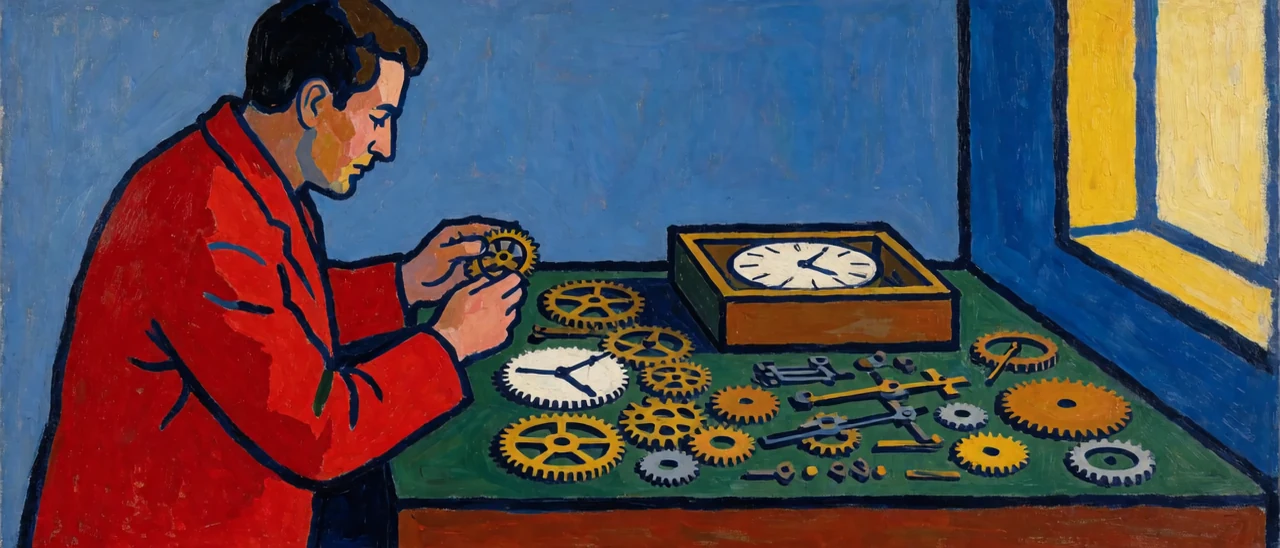
2. Thomas Metzinger: the self-model theory and the phenomenal model of the intentionality relation (PMIR)
Metzinger sees the self not as a substance but as a transparent self-model the brain constructs. As long as the model does not recognize itself as a model, it is experienced as "I." The state in which the self-model is not seen as a model is the handler; the moment the model is seen as a model is the governor at work. The PMIR Metzinger proposed has been pointed out as essentially the same mechanism that Michael Graziano's attention schema theory deals with.
Metzinger separately acknowledges an exception that the self-model framework does not explain: non-dual awareness, a state with no subject-object split and no representation of time. It corresponds structurally to the governor's computing environment defined in <Cognitive Axioms 05_1>, a state in which no time axis and no boundary axis are set up. Metzinger treats this state as a limiting case of a brain-based model and makes no metaphysical claim. The governor concept makes no metaphysical claim either, so the two don't collide here. Where they part is that Metzinger leaves space-time coordinates standing as facts of the world and treats the state that lacks their representation as an exception. The governor concept sees the space-time coordinates as settings for survival.
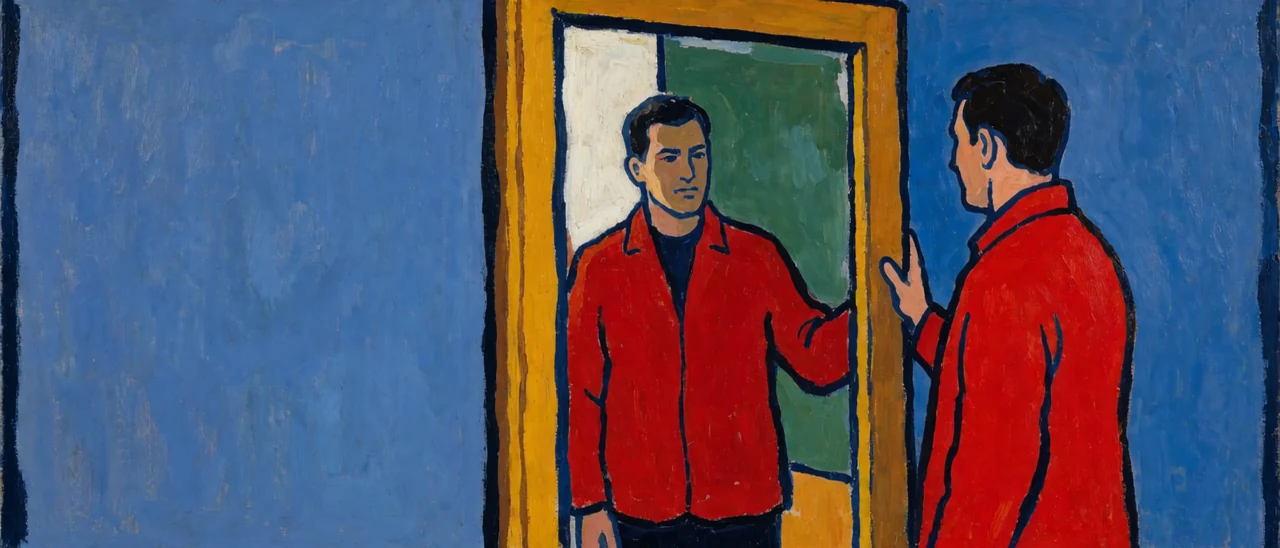
3. Michael Graziano: Attention Schema Theory
Graziano holds that just as the brain builds a body schema, it builds a simplified internal model of attention itself, an attention schema, and that this incomplete, schematic information leads the brain to conclude that it has a non-physical subjective awareness. It is a materialist, illusionist position in line with Dennett and the Churchlands. The scheme that treats the first-order representations the handler makes as products of memeplexes, and defines the second-order representation that recognizes them as tools as the governor's function, is functionally close to Graziano's meta-structure, which treats awareness as a model the brain builds and then takes that model as an object of observation. Graziano completes the process as a computational mechanism and keeps space-time coordinates as a premise.
4. Higher-order theory of consciousness: the Rosenthal line
Higher-order theory, represented by Rosenthal, holds that a mental state is conscious only when there is a higher-order thought about that state. At the level of formal logic this matches exactly the governor's scheme of second-order representation over first-order representation. The theory has lately been tied to activity in the prefrontal cortex (PFC) and developed into a form that neuroscience can test, and its structural closeness to metacognition is discussed along with it. Higher-order theory treats higher-order thought as the condition for consciousness to arise; the governor concept treats second-order representation as the act of being released from space-time settings. The same structure is put to work on different questions.
5. Kim Joo-hwan: the experiencing self, the remembering self and the background self
To Daniel Kahneman's dichotomy of the experiencing self (the self that feels experience here and now) and the remembering self (the self that recalls past experience and turns it into story), Kim Joo-hwan adds the background self as a third term. The background self notices the very existence of the experiencing self and of the remembering self, and that noticing is defined as the starting point of change in the self. Of all the tripartite schemes, this is the closest functional match. The experiencing self corresponds to the avatar's layer of immediate perception, the remembering self to the handler layer that accumulates memeplexes and composes stories, and the background self to the governor layer that takes those two as objects of observation.
They part ways at two points. First, the background self is defined as the product of mind strength, a trainable psychological muscle, and is something strengthened through the practices of meditation and inner communication. The governor is activated at once by a single trigger sentence. Second, the background self is explained as a psychological function based on particular circuits in the brain, and it keeps space-time coordinates as a premise. On this point it falls into the same category as the functionalist line of Metzinger, Graziano and higher-order theory. The background self concept has also drawn the criticism, from an integrative perspective, that it is a categorization mixing cognitive resources with a time dimension.
6. Michael Polanyi: tacit knowledge
This is the concept that divides knowledge into two modes, explicit and tacit. It sits well with Peirce's maxim, since the proposition "we know more than we can tell" is proved by the results of performance. It deals only with how knowledge is stored and does not take up the question of who runs that knowledge in real time, so the range in which it passes the maxim is narrow.
7. Summing up
This line describes only functions, without metaphysical claims, so it is strong by the standard of observability. Metzinger's non-dual awareness comes closest to the governor's computing environment, but it is dealt with only as an exceptional case. This line presupposes space-time coordinates as facts of the world and describes the layers of the self on top of them. The governor concept looks at the same layers but sees the space-time coordinates as the handler's survival settings.
Same layers, different standing for the coordinates.